This year, the prize for the best thesis was awarded to Joseph Jorssen (ULiège) for his PhD thesis “Characterization of eosinophil development and lineage expansion through transcriptomic and high-dimension flow cytometric approaches”.
Summary of the thesis
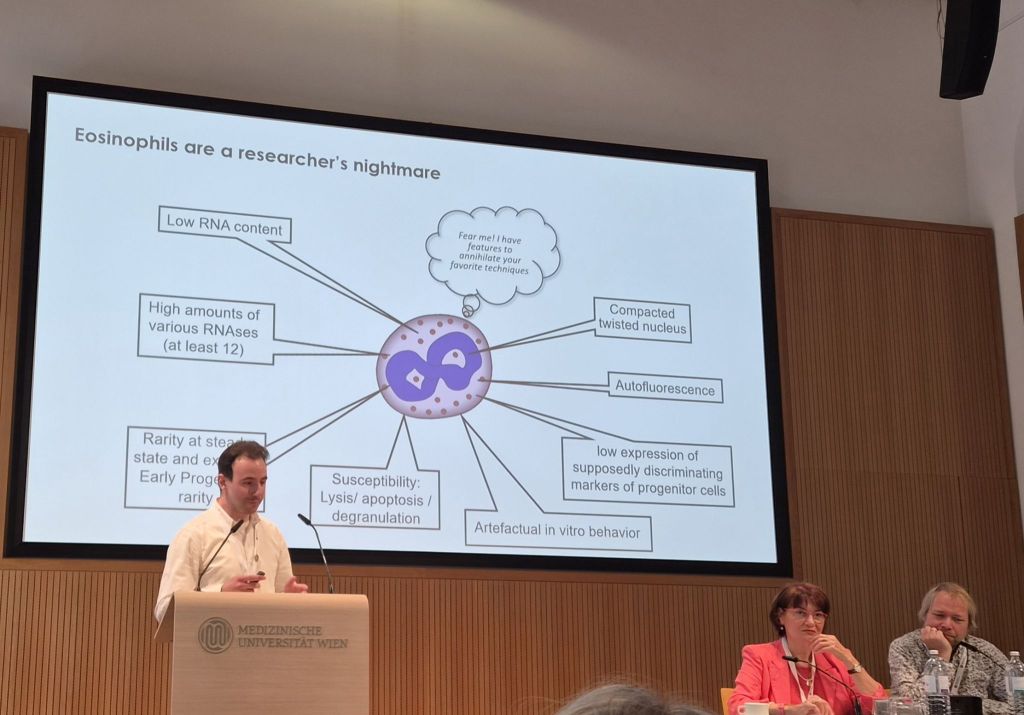
Eosinophils are specialized granulocytes known for their diagnostic value in type 2 immune disorders as well as their roles in immune homeostasis, microbial defense and metabolism. Despite the increasing use of biological therapies targeting eosinophils through their dependency on Interleukin-5 (IL-5), the biological activities, ontogeny and mechanisms of lineage expansion of eosinophils are less resolved than those of other immune cells.
We integrated single-cell proteomics and transcriptomics with a novel IL-5Ra reporter (IL5RAporter) mouse model to comprehensively resolve eosinophil development. This approach reconciled human and murine eosinophilopoiesis and facilitated further study of the eosinophil lineage.
We observed that the eosinophil lineage expands via a transit amplification mechanism enabled and promoted by IL-5 bioavailability. Eosinophil lineage transit amplification was characterized by increased cycling activity, prolonged proliferative capacity, and delayed maturation of committed eosinophil progenitors. Conversely, deletion or neutralization of IL-5 attenuated eosinophil progenitor transit amplification without compromising maturation, challenging previous assumptions. Further comparison of residual eosinophils in IL-5-depleted murine or human hosts indicated that IL-5 depletion does not impair eosinophil maturation.
Overall, this work provides valuable resources and insights into eosinophil ontogeny, the effects of precision therapeutics, and the regulation of eosinophil development in health and disease.

 Belgian Immunological Society